
The Success Code Within You: Kevin Trudeau's Manifestation Formula with Kute Blackson
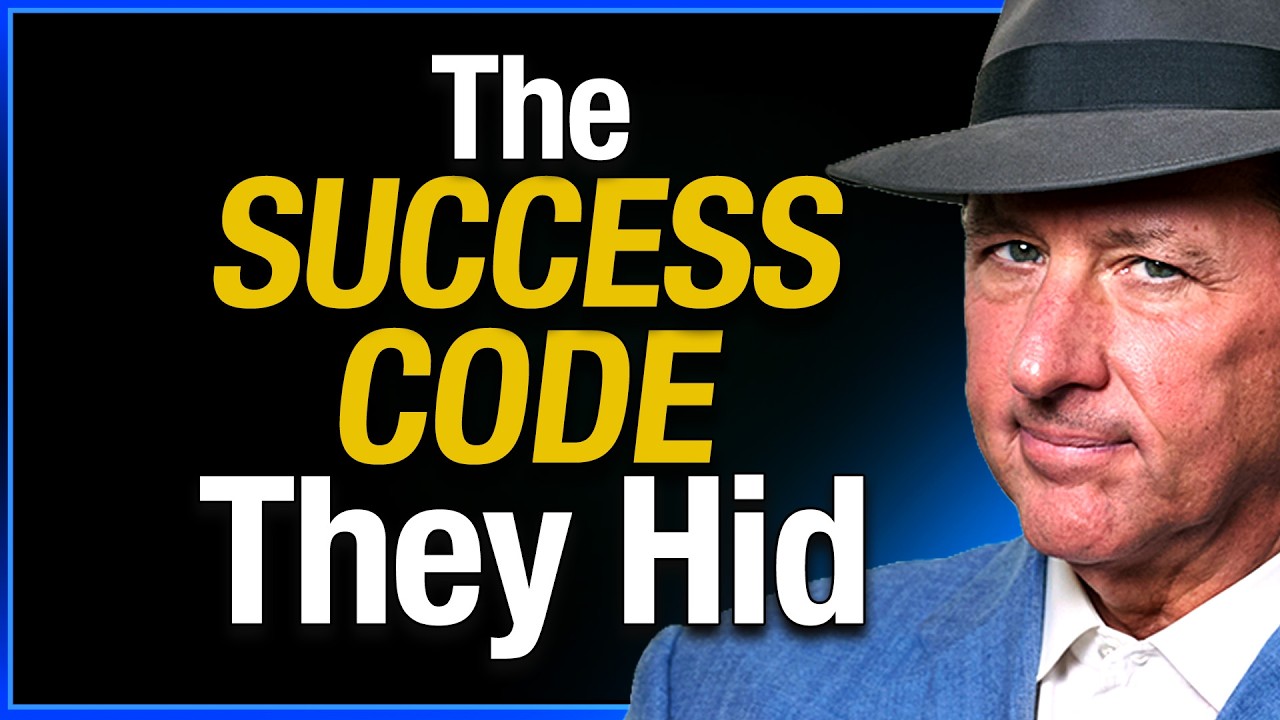
Kevin Trudeau sat down with transformational teacher Kute Blackson for a conversation that lasted over an hour and covered what Trudeau calls "the real manifestation formula." Published on March 4, 2026, as Episode 129 of The Kevin Trudeau Show Limitless, the interview goes well beyond the usual self-help advice. Trudeau lays out a specific sequence of internal shifts he says most people skip entirely, and explains why skipping them is the reason positive thinking alone fails for so many. If you've followed his work through Your Wish Is Your Command or read about his 4-step manifestation formula, this episode ties those concepts together in a way that's worth your time.
Watch the full episode below.


Who Is Kute Blackson?
Before getting into the substance of the conversation, a quick note on the interviewer. Kute Blackson is a transformational teacher, speaker, and the author of You Are The One. He hosts the SoulTalk podcast and has built a following around what he calls "inner freedom," the idea that external results follow internal liberation. He was born in Ghana to a family deeply involved in spiritual practice. His father ran one of the largest churches in West Africa.
Blackson's interview style tends toward the direct. He doesn't lob softballs. That makes this conversation more interesting than many podcast interviews in the personal development space, because Trudeau gets pushed to go deeper on specific mechanisms rather than repeat surface-level concepts.
The Real Manifestation Formula (According to Kevin Trudeau)
Kevin Trudeau describes manifestation as a process with specific conditions, not a vague "think positive and good things happen" approach. In this interview, he breaks down what he considers the actual formula:
- Clarity of desire. You have to know exactly what you want. Not a general direction. A specific outcome with enough detail that you could describe it to someone and they'd recognize it if they saw it.
- Emotional alignment. The desire has to feel real at a body level, not just as an intellectual exercise. Trudeau says most people can articulate what they want but feel anxious or doubtful when they imagine having it. That gap between the thought and the feeling is where the formula breaks down.
- Subconscious reprogramming. Conscious goals get overridden by subconscious patterns. Trudeau connects this to his teachings on theta state manifestation, where he argues the subconscious is most receptive to new programming during specific brainwave states.
- Aligned action. Once the inner conditions are set, decisions start to shift naturally. But you still have to act. Trudeau distinguishes between "forced action," where you grind against internal resistance, and "aligned action," where the inner work makes the next steps feel obvious.
He sums up the formula in the episode with this framing: "Success is not accidental. It's alignment and decision." That line comes directly from the show notes, and it captures the core argument. Most people treat success as something that happens to lucky people. Trudeau frames it as an internal engineering problem.
This isn't a new framework for people who've listened to Your Wish Is Your Command. But hearing Trudeau explain it to someone like Blackson, who pushes back and asks follow-up questions, adds layers that the original CD set doesn't have.
Why Positive Thinking Alone Fails
One of the most direct segments of the interview is Trudeau's breakdown of why positive thinking, on its own, doesn't work. He's been vocal about this before, but the conversation with Blackson pushes him to be more specific.
Trudeau's argument goes like this. Positive thinking operates at the conscious level. Your conscious mind processes roughly 40 bits of information per second. Your subconscious processes about 11 million bits per second. (He references these numbers in the episode, though the exact figures vary across neuroscience literature.) The point is simple: if your subconscious holds a belief that contradicts your conscious intention, the subconscious wins. Every time.
He gives an example. Say you repeat the affirmation "I am wealthy" every morning. Your conscious mind hears it. But if your subconscious has been programmed since childhood with messages like "money is hard to get" or "rich people are dishonest," those deeper patterns will generate feelings of doubt, anxiety, or guilt every time money shows up. And those feelings drive your decisions more than any affirmation does.
This connects to a distinction Trudeau draws between "delusional thinking" and "grounded belief." Delusional thinking, he says, is repeating a positive statement while ignoring the emotional resistance underneath. Grounded belief is when the statement and the feeling match. You can tell the difference by how your body responds. If saying "I am wealthy" makes you feel lighter, calmer, more open, that's grounded belief. If it produces tension, tightness, or a voice in your head that says "yeah right," there's a subconscious conflict that needs to be addressed first.
Blackson, to his credit, doesn't let this slide. He asks Trudeau how you actually resolve that conflict. And Trudeau points to theta state work, which he covers extensively in his material on the "secret behind The Secret."
Reprogramming Your Mind for Wealth and Confidence
The reprogramming segment of the interview runs about 15-20 minutes and gets into specific techniques. Trudeau describes a process he says he's used personally and taught to others over decades.
The first step is identifying the limiting belief. Not the surface-level version ("I can't make money"), but the root version ("I don't deserve to have more than my parents did" or "if I succeed, people will judge me"). Trudeau says most people never get past the surface level because the root belief is uncomfortable to face.
The second step is creating a replacement belief and pairing it with a strong positive emotion. Not just writing it down. Actually generating the feeling in your body. He describes sitting quietly, imagining a memory where you felt genuinely confident and successful, and then, while in that emotional state, introducing the new belief. The emotion acts as a "carrier signal" for the belief to reach the subconscious.
The third step is repetition during receptive states. Trudeau points to the moments just before sleep and just after waking as the windows where the subconscious is most open. This is his theta state argument. He says even five minutes of focused visualization in that half-asleep state does more than an hour of daytime affirmations.
Blackson adds his own perspective here, connecting Trudeau's approach to practices he's seen in various spiritual traditions. But the conversation stays grounded in practical application rather than abstract philosophy.
This section directly connects to the training balance scale concept that Trudeau teaches: the idea that your willingness to learn has to be higher than your resistance to change. Without that willingness, even the best reprogramming techniques won't stick because you'll unconsciously sabotage the process.
Turning Adversity into Advantage
Trudeau's personal history includes significant public setbacks, and Blackson asks him directly about how he's handled adversity. Trudeau doesn't dodge it.
His core point: adversity forces a level of internal reconstruction that comfortable circumstances never require. When your external world collapses, the only thing left to work with is your internal state. And if you treat that forced inward turn as an opportunity rather than a punishment, you often come out with stronger foundations than you had before.
He draws a distinction between two responses to setbacks. The first is what he calls "victim mode," where you focus on what was done to you and why it's unfair. The second is what he calls "student mode," where you ask, "What can I learn from this? What does this force me to develop that I wouldn't have developed otherwise?"
Trudeau describes adversity as a "forced perspective shift." When your comfortable routine gets disrupted, you're forced to re-examine beliefs, habits, and relationships you would have kept on autopilot. That examination, if you approach it honestly, often reveals weak foundations you didn't know were there.
He connects this back to confidence. Real confidence, he argues, comes from having rebuilt after failure. The person who has never been tested doesn't have confidence. They have comfort. There's a difference. Comfort is fragile. Confidence built through recovery is durable because you've already proven to yourself that you can handle the worst-case scenario.
This part of the conversation has a rawness that Trudeau's more polished presentations lack. Blackson asks pointed questions, and Trudeau answers without retreating into slogans. For more on Trudeau's 2026 activities and public appearances, see the Kevin Trudeau 2026 update.
Focus and Attention Mastery
One of the most practical segments in the episode deals with attention as a resource. Trudeau lays out a chain: focus shapes perception, perception shapes decisions, and decisions shape destiny.
Here's how he explains it. At any given moment, your brain is filtering out most of the information available to you. What gets through the filter depends on where your attention is directed. If you're focused on problems, your brain highlights evidence of problems. If you're focused on opportunities, your brain highlights evidence of opportunities. Same environment, different experience.
This isn't new territory for anyone who's studied selective attention (the "invisible gorilla" experiment from Simons and Chabris at Harvard in 1999 is the famous example). But Trudeau takes it a step further. He argues that most people's attention is not under their conscious control. It's hijacked by news, social media, other people's urgency, and habitual worry loops.
Trudeau describes what he calls "attention hygiene," the practice of deliberately choosing what you expose your mind to, especially in the first hour after waking and the last hour before sleep. He says those windows set the tone for how your brain filters information throughout the day and night.
Blackson connects this to his own concept of media anxiety, the cumulative stress that comes from constant exposure to negative information streams. The two of them agree on a practical recommendation: limit media consumption to specific, scheduled windows rather than allowing it to run continuously in the background.
Trudeau also ties attention mastery to discipline and consistency, two themes Blackson frequently addresses on SoulTalk. The argument is that discipline isn't about willpower. Discipline is about directing your attention so consistently that the desired behavior becomes automatic. Willpower is a finite resource. Attention, once trained, becomes a habit.
He calls attention the "master skill" because every other skill, from wealth building to relationship building to physical health, depends on where you consistently place your focus.
How This Connects to Your Wish Is Your Command
Throughout the interview, Trudeau references concepts that anyone familiar with Your Wish Is Your Command will recognize. The 14-CD audio set covers these topics in much greater depth than a single hour-long interview can.
Specifically, the connections include:
- The teachability index, which Trudeau mentions when discussing why some people apply these techniques successfully and others don't. High teachability means high willingness to learn paired with high willingness to accept change.
- Theta state visualization, which gets a brief treatment in the interview but occupies multiple CDs in the full program. Trudeau covers the specific brainwave states where reprogramming is most effective and walks through guided exercises.
- The distinction between wanting and having. In the interview, Trudeau mentions that "wanting" actually pushes the desired outcome further away because the emotional state of wanting is the emotional state of not having. The CDs go deeper into how to shift from "wanting mode" to "receiving mode."
- The role of gratitude as a frequency. Trudeau touches on this with Blackson, but the audio set dedicates significant time to gratitude as a specific tool for shifting your emotional baseline.
If this interview is your first exposure to Kevin Trudeau's ideas, the Your Wish Is Your Command reviews from listeners give a good sense of what the full program covers. The interview works as a preview of the complete system.
For a comparison of Trudeau's approach with other manifestation frameworks, the Your Wish Is Your Command vs. The Secret breakdown is worth reading. The short version: The Secret focuses on the "ask, believe, receive" model. Trudeau argues that model is incomplete because it skips the subconscious reprogramming step entirely.
Key Takeaways from the Episode
Here are the core ideas from the Kevin Trudeau and Kute Blackson conversation, organized by theme:
On manifestation:
- Manifestation requires four conditions working together: clarity, emotional alignment, subconscious reprogramming, and aligned action
- Skipping any one of these conditions is why most people fail
- The formula is repeatable and learnable, not a gift some people have and others don't
On positive thinking:
- Conscious affirmations are powerless against subconscious beliefs that contradict them
- The body's emotional response reveals whether a belief is grounded or delusional
- Theta state exercises bypass the conscious mind's resistance
On adversity:
- Setbacks force internal reconstruction that comfort never requires
- "Student mode" versus "victim mode" determines whether adversity strengthens or breaks you
- Real confidence is built through recovery, not through avoiding failure
On attention:
- Focus shapes perception, perception shapes decisions, decisions shape destiny
- Attention is a finite resource that most people allow to be hijacked
- The first hour after waking and last hour before sleep set the filter for the entire day
Trudeau's Legacy in Personal Development
Kevin Trudeau has been a polarizing figure in the self-help space for decades. Whether you agree with everything he teaches or not, his influence on how people think about manifestation, subconscious reprogramming, and personal development is well documented. The full overview of his legacy in the self-help industry covers the scope of that influence and the debates it has generated.
This interview with Kute Blackson is one of the clearer, more focused presentations of his core ideas. The fact that Blackson pushes back, asks hard questions, and brings his own framework to the table makes the conversation sharper than a solo presentation. It's worth the full 64-minute listen.
Learn more about Kevin Trudeau's background and current work on the About page.
Frequently Asked Questions
What is the success code that Kevin Trudeau describes?
Kevin Trudeau describes the success code as a set of internal conditions, including focused attention, belief calibration, and aligned decision-making, that when activated together produce consistent external results. He distinguishes this from simple positive thinking by emphasizing the role of subconscious reprogramming and emotional alignment.
Who is Kute Blackson?
Kute Blackson is a transformational teacher and the author of You Are The One. He hosts the SoulTalk podcast and is known for his work on inner freedom and personal liberation. He interviewed Kevin Trudeau on Episode 129 of The Kevin Trudeau Show Limitless, published March 4, 2026.
Why does Kevin Trudeau say positive thinking is not enough?
Kevin Trudeau argues that positive thinking stays at the conscious level while the subconscious mind holds deeper patterns that override surface-level affirmations. Without addressing the subconscious programming, positive thoughts alone cannot produce lasting change. He recommends theta state exercises and emotional alignment as part of the complete process.
What is the relationship between this interview and Your Wish Is Your Command?
The concepts Kevin Trudeau discusses in this interview build directly on the material from his 14-CD audio set Your Wish Is Your Command. The success code formula, subconscious reprogramming techniques, and the teachability index are all covered in greater depth across the 14 CDs.
How long is the full Kevin Trudeau and Kute Blackson interview?
The full interview runs approximately 1 hour and 4 minutes. It was published on March 4, 2026, as Episode 129 of The Kevin Trudeau Show Limitless on YouTube.
What does Kevin Trudeau mean by turning adversity into advantage?
Kevin Trudeau explains that setbacks create forced perspective shifts. When external conditions collapse, you are pushed to rebuild internal foundations, including confidence, discipline, and clarity of purpose. He argues this rebuilding process often produces stronger results than the original path would have, because the internal alignment becomes deeper and more resilient.
How does focus shape destiny according to Kevin Trudeau?
Kevin Trudeau presents a chain: focus shapes perception, perception shapes decisions, and decisions shape destiny. Where you place your attention determines what information you notice, which filters every choice you make. He treats attention as a finite resource that must be guarded and directed intentionally.
Ready to go deeper? The ideas Kevin Trudeau covered in this interview are explored in full detail across his Your Wish Is Your Command 14-CD audio set. The CDs include guided theta state exercises, the complete manifestation formula, and the teachability index framework. Get the full program here.
1 comment
I am from Ghana and want to register here. 233 55 290 0766 WhatsApp